
Grace & Ease
Sometimes, it's all in the approach.

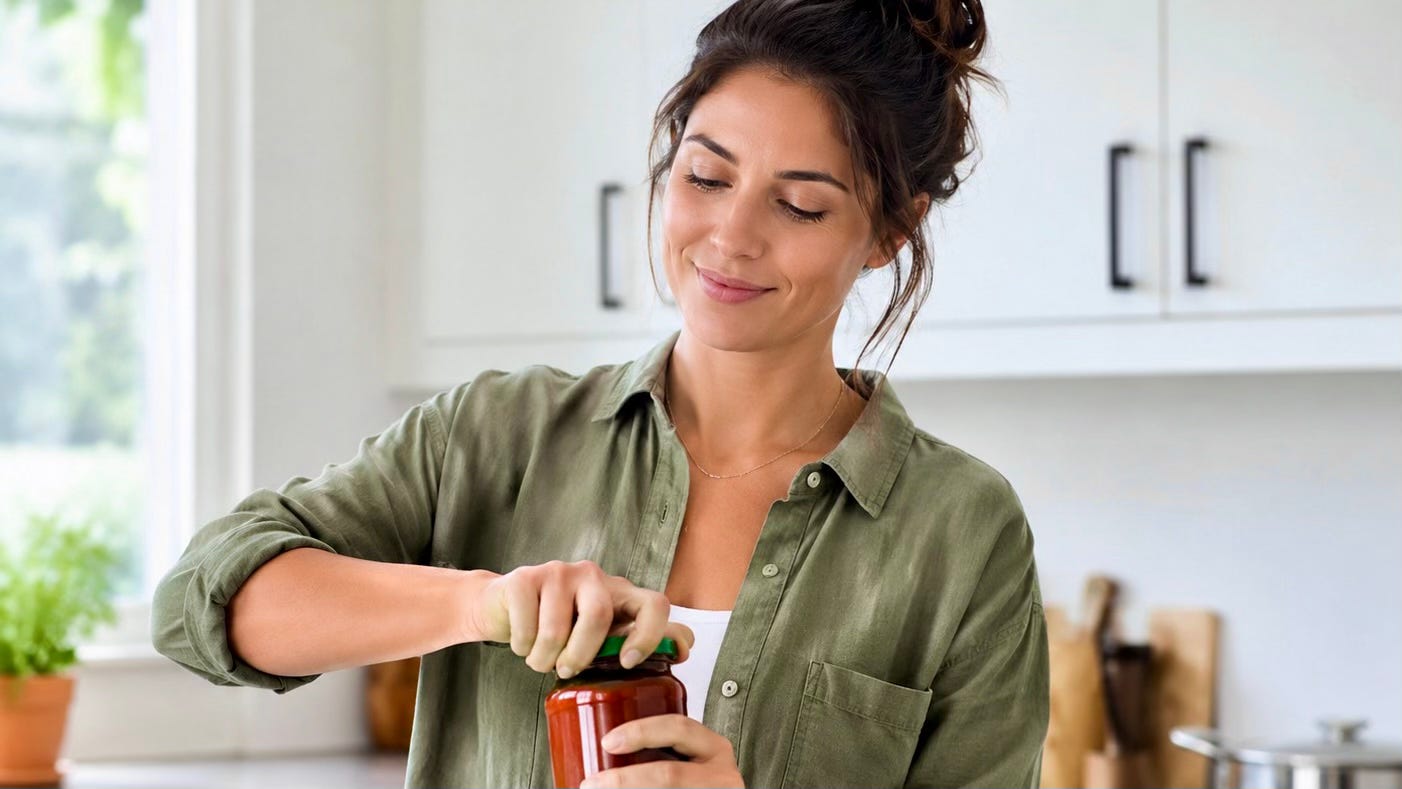
A few weeks ago, I was visiting family in Napa. My sister and I stood in our pjs at the top of the stairs before heading to our rooms at opposite ends of the hall. While we chatted a bit, she struggled to open a brand-new jar of something. She tried and failed. About the time I might have thrown the jar down the stairs in frustration, she took a breath and centered herself.
“Grace and ease,” she said. “I’ve started saying that, and I find it helps.” Sure enough, she got the jar open on the next try.
I’ve never had a particularly powerful grip, and I’ve noticed it’s harder for me to unscrew things than it used to be. And my hands ache like a bad memory when I strain and twist and the cover stays stuck.
I used to just pass jars to Steve to open, but he’s suffering from increased arthritis in his hands, too. I can’t very well trade my pain for his. So, I took note of Kristi’s technique.
There are any number of tricks for opening a jar—use a rubber glove, a silicone-backed pot-holder, one of a number of gadgets that fill my kitchen drawers, or wedge the pointy end of an old-fashioned can opener up into the threads to break the seal.
Do you have a favorite hack? Mine was to turn the jar upside down and quickly whack the lid, twice, on the kitchen counter.
I don’t know why that breaks the seal, but it works like a charm. It’s always made Steve nervous, though, even back when our counters were made of softer stuff. So, after Kristi said those lovely words, I started building a new habit.
I noticed a funny thing—when I forget to say the words, I unconsciously expect the jar to be hard to open, and so it is.
When I make the approach with grace, however, the jar opens with ease. Huh. I began expecting jars to open effortlessly. And they did.
What had I just learned? If the degree of difficulty has nothing to do with my arthritic hands, and everything to do with my attitude, will this work for different sorts of struggles?
What about logging into a website when I forget my password? Scheduling a repairman? Getting a live customer service rep on the phone? Finding my way when the GPS directions are less than clear? Maybe the things that annoy me to tears are only as hard as I make them out to be.
I’ve certainly noticed how much nicer those service reps are when I begin the conversation, say—conversationally—rather than as if my problem is their fault.
Have I been struggling unnecessarily? Fighting my own fears? This line of questioning brought me to Deb Engle’s story about rattles in her dashboard.* Can a shift in my thinking change the real world?
Obviously, opening a jar isn’t a fear-inducing exploit, but at my age, it’s easy to let it be symbolic of larger issues. Living in chronic pain, needing help, being on the downslope side of life, even death. It was time to relearn a lesson from my thirties.
I gave birth to my first child at thirty-one. Having waited that long, I wanted to get everything right, give my daughter every chance for health and wellness. During my pregnancy, I gave up alcohol, runny eggs, raw cookie dough, and hardest of all, sushi. When it was time to give birth, I denied myself anesthetics of any kind. Towards the end of a twenty-one hour delivery, I was exhausted and regretted my stubborn stand. I would’ve rather had help.
Matthew came four days after my thirty-fourth birthday. The pregnancy was hard. This time, when they offered me a hep-lock just in case I changed my mind about the drug offerings, I let them insert an IV access device. Sure enough, the time came when I decided to give my body a break. Just a little something to take the edge off, doc said.
They administered the medication and for the next few minutes, I breathed easier, knowing it would be painless from here on. When the contraction came, I was shocked by my misunderstanding.
I yelled at my marvelous doctor. “Hey! Doc! I thought you said this would take the edge off. That hurt like a beast.”
…It turns out the drug took the edge off my panic, not my pain.
It still hurt, but I didn’t feel like it would kill me. I wasn’t scared of the pain. It was fear of repeating my first experience that made everything seem worse than it was. Oh. I relaxed again, knowing I was safe.
Just then, I caught sight of myself in a mirror across the room—short hair pushed back with a braided blue and white tennis headband, holding onto the squat bar at the foot of the bed—looking fierce and fit. Not a bit afraid. The rest of my delivery progressed with grace and ease.
*The story of the rattles in the dashboard is from The Only Little Prayer You Need, by Debra Landwehr Engle.
Lyssa, I love this! We have the same jar unscrewing issues here, especially since the dog bite on my right hand... I'm going to try your approach fueled by Deb's uncanny way of site and symbiosis.
All great reminders. Thank you